Ken Griffin’s Citadel Reveals Massive Bullish Positions in XRP ETFs

Why Google is helping homeowners buy heat pumps
- Investment Opportunities Markets
 Peter Lynch
- 5 minutes read
If you live in a certain part of the Bay Area, Google might help you buy a new heat pump—and could offer you as much as $10,000 to do it.
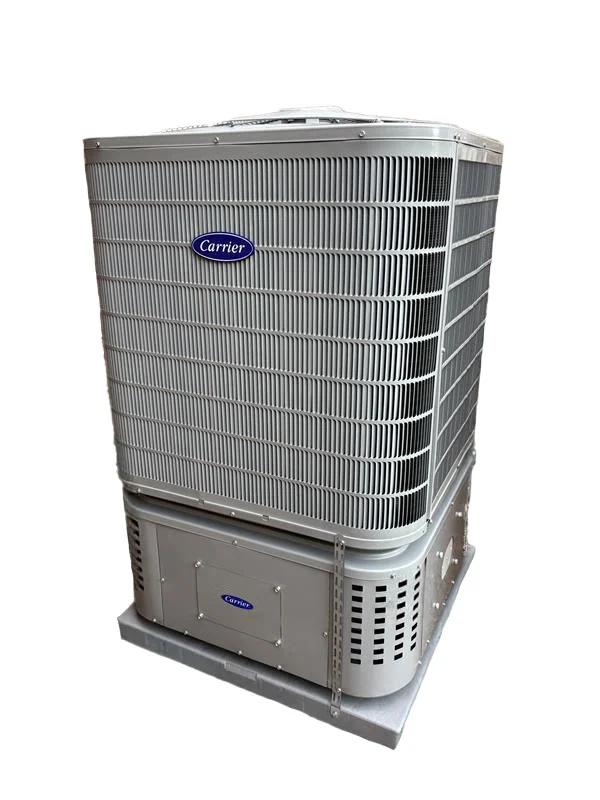
In an innovative new proof-of-concept program, the tech giant is partnering with the utility company PG&E and nonprofit Rewiring America to find a new way to unlock more grid capacity. The first product rolling out in the program is a Carrier heat pump with a battery inside, meaning that it can charge when there’s extra solar power on the grid and then use that energy later when the grid is under strain—for example, on a hot summer day when the heat pump is being used for AC.
Heat pumps double as efficient heaters and efficient air conditioners. They’re quickly growing in popularity as sales continue to outpace gas furnaces. But by speeding up adoption, Google and its partners can bring bigger benefits to the grid.
Rewiring America proposed the basic idea a year ago: Hyperscalers that want to quickly add more capacity to the grid don’t always have to build new power plants. They can also support virtual power plants—networks of solar panels, batteries, and smart appliances that can be coordinated to act like a power plant—by helping people add more clean tech at home. At the same time, it’s a way for homeowners to save money on their own energy bills.
“A big part of what we’re doing here is not just thinking about it in terms of what’s most beneficial for the grid, but what is the win-win solution that also works for the household, delivering significant bill savings, comfort benefits, and resilience benefits,” says Rewiring America CEO Ari Matusiak.
PG&E already uses virtual power plants, including a partnership with Sunrun that connects to more than 100,000 home batteries. But the new program, called SHARE (Smart Home Assets for Reliability and Efficiency) is unique because Google will be helping homeowners get new technology. The tech company will also be funding incentives for some PG&E customers who already own devices but aren’t yet part of a virtual power plant. PG&E is working with Sunrun, Tesla, and Renew Home to enroll around 20,000 households with existing equipment. Collectively, participants will be able to deploy 12 megawatts of additional capacity when the grid is strained.
Eligible homes are strategically located in an area with growing electricity demand where PG&E is planning to build a new transmission line. The utility will be studying how the virtual power plant performs in the area. “There’s a whole lot of work going into really identifying where each electron is going and if it’s doing what we need it to do for our grid,” says Trevor Udwin, who works on virtual power plants and grid asset optimization for PG&E.
investment News
Energy,google

