
What if AI data centers didn’t need new power plants?
- Investment Opportunities Markets
 Peter Lynch
- 4 minutes read
A new data center in southwest Texas isn’t connected to the grid—but it also didn’t require building any new power plants. Instead, a startup called Rune used modular technology to plug in directly at a solar farm, running on solar power that would otherwise be wasted.
The company, which just raised a $40 million Series A round of funding led by Spark Capital, says that its model can be replicated at solar plants around the country, giving data centers access to clean power faster and cheaper than building new power capacity.
“We’re the fastest time to compute,” says Rune’s CEO, William Layden. “We don’t need to wait three years, four years, five years for new infrastructure to get built. We’re using what we have today to bring on compute today.”
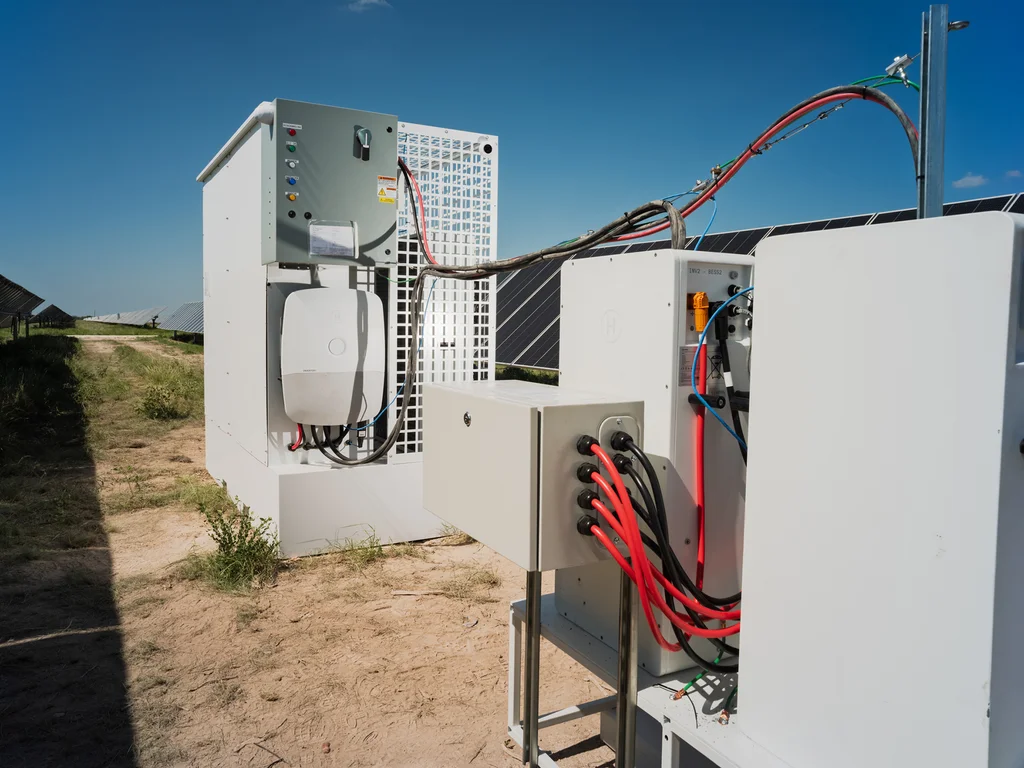
Rune taps solar power that the grid can’t use
A typical solar plant wastes as much as 20% of the energy that it generates, the company says. There’s often so much extra solar power in the middle of the day that grids can’t make use of it. The California grid, for example, wasted around 3.5 million megawatt-hours of solar in 2025, an amount that could have powered hundreds of thousands of homes. Solar power plants also waste power when transformers or other equipment are offline.
Some of that extra power can be stored in large-scale batteries. But Rune says it also makes sense to tap into it directly. The company’s modules, called RELIC (renewable energy linked intelligent compute), house servers, cooling equipment, and custom power electronics that connect the solar panels to the computers.
“Solar produces direct current electricity; computers run on direct current electricity,” says Layden. “Nothing connected them before Rune.” Because the system runs on DC power—safely converting the high-voltage electricity from solar into the right voltage—it doesn’t need traditional transformers, equipment that currently faces shortages. “Our supply chain is radically simpler and actually more robust,” he says.
The system is also much faster to build. It avoids the supply chain challenges that other approaches face, including gas power plants, which can face four-year delays for transformers. It also doesn’t have to deal with the long process of grid interconnection and permitting, or community opposition to building new power plants. Essentially no construction is needed; the company just places its 8-by-8-foot modules on site using a forklift.
investment News
Artificial Intelligence,data centers,Rune,solar,Texas

