XRP Price Prediction as Ripple-Backed PAC Launches $30M Campaign After CLARITY Act Collapse

Paramount and WBD’s messy rebrand histories visualize an industry in crisis mode
- Investment Opportunities Markets
 Peter Lynch
- 6 minutes read
With Paramount Skydance now set to merge with Warner Bros. Discovery, CEO David Ellison is about to control some of the most recognizable logos in American entertainment.
But a very recent history of the companies’ multiple rebrands over the past few years, which typically combined heritage marks with contemporary branding, shows an entertainment industry in flux. In retrospect, their brand evolutions act as visual shorthand: Both the quantity of the changes and the business rationale behind them tell a broader industry story of falling revenue and consolidation.
Ellison, the son of Oracle cofounder and billionaire Larry Ellison, acquired Paramount in 2025 through his production company, Skydance Media. Skydance produced its first film in 2006, Flyboys, which starred the younger Ellison, and it later coproduced films like 2011’s Mission: Impossible–Ghost Protocol and 2022’s Top Gun: Maverick.
By merging with Paramount, Ellison’s production company quickly became an industry player. It acquired a vast trove of assets, including media brands like CBS News and MTV, and beloved intellectual property like SpongeBob SquarePants.
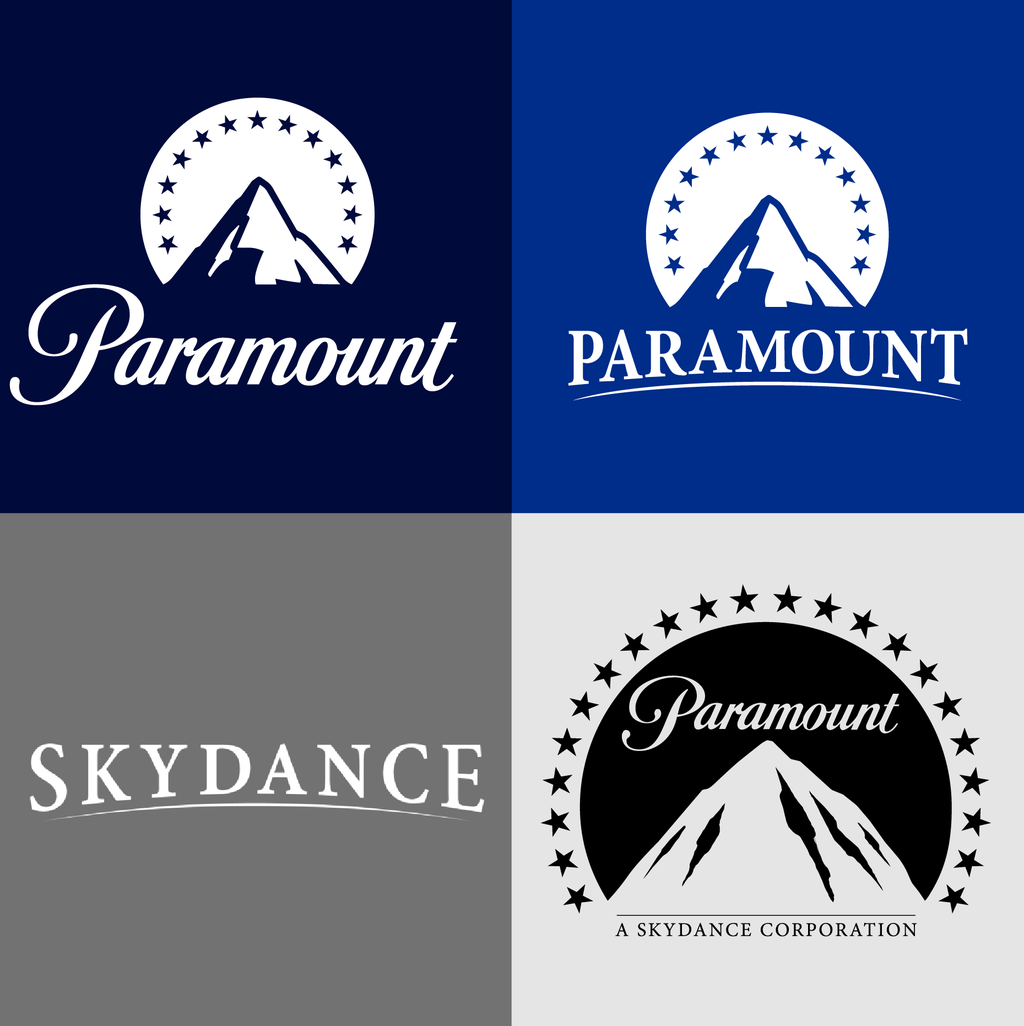
But the resulting logo, released following the acquisition news last year, inartfully smashed elements of the two brands together: Paramount’s longtime logo of a mountain surrounded by stars that’s inspired by Ben Lomond Mountain in Northern Utah, and Skydance’s serif-font wordmark style. It’s since brought back a version of Paramount’s script wordmark and added “A Skydance Corporation” in all-caps serifs below.
The Warner Bros. logo hasn’t had much staying power in recent years either. Pentagram rebranded Warner Bros. Discovery in 2019 as part of what was then called Warner Media. Partner Emily Oberman and her team refined, modernized, and elongated the classic Warner Bros. shield logo and adopted a new, more vibrant shade of blue for the company’s first refresh in decades.
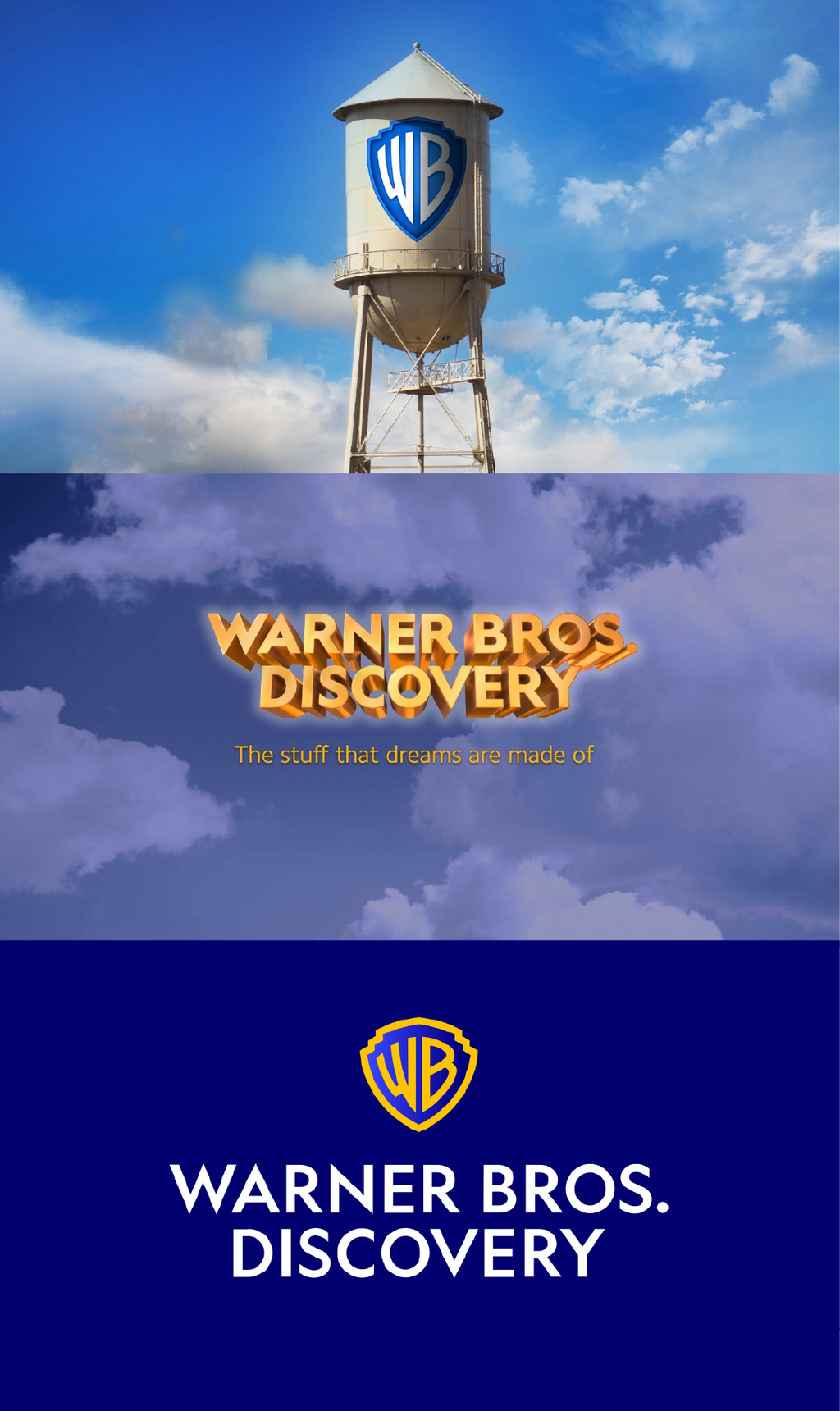
A mere three years later, Chermayeff & Geismar & Haviv rebranded Warner Bros. again when it was spun off from its previous owner AT&T and merged with Discovery. It initially adopted a new wordmark that Creative Bloq compared to WordArt stylistically, but the final rebrand was more broad. It changed the shape of the WB shield logo—again—this time to be more circular, and a “Warner Bros. Discovery” wordmark was added in a nondescript sans-serif font.
Today, the company combines brands like CNN, Discovery Channel, HBO, and DC Entertainment, all of which will be under the Paramount Skydance umbrella with the merger.
A dozen states challenged the merger following monopoly concerns and worries that Ellison, an ally of President Donald Trump, would influence content and news coverage decisions. The states that filed the antitrust lawsuit announced on September 21 they had settled the suit following concessions made by Paramount, including a commitment to produce a certain number of films over multiple years and annual spending minimums of an additional $1.5 billion on U.S. production.
Both companies’ streaming services have also undergone multiple rebrands. Warner Bros. Discovery’s HBO Max, first launched in 2020, shortened to Max in 2023 before reverting back to HBO Max in 2025, with revamped logos each step of the way. Meanwhile, Paramount+ changed its name to Paramount+ with Showtime following a 2023 merger before shifting to Paramount+ Premium in 2025. Confused yet?

At this point, the number of rebrands across Warner Bros. Discovery, Paramount, and their subsidiary streaming services has neared double digits as they continue to react to their own consolidation needs, changing consumer habits, and heavyweight streaming competitors like Netflix and Amazon.
Though long-running visual elements like the Paramount mountain and WB shield remain, the constant rebranding due to mergers shows how volatile the legacy media industry has become, with each logo communicating a new reality of the modern media landscape: confused, convoluted, and rapidly changing. Some might even call it an identity crisis.
investment News

