Riverview Bancorp director Kourosh Zamanizadeh buys $19,358 in stock By Investing.com

Mastercard is rethinking its iconic ‘Priceless’ campaign after nearly 30 years
- Investment Opportunities Markets
 Peter Lynch
- 7 minutes read
Mastercard’s new marketing push aims to give America’s 36 million small businesses a morale boost as they face pressures ranging from increased energy prices triggered by war in the Middle East, tariffs that have upended supply chains, and higher labor and operating costs.
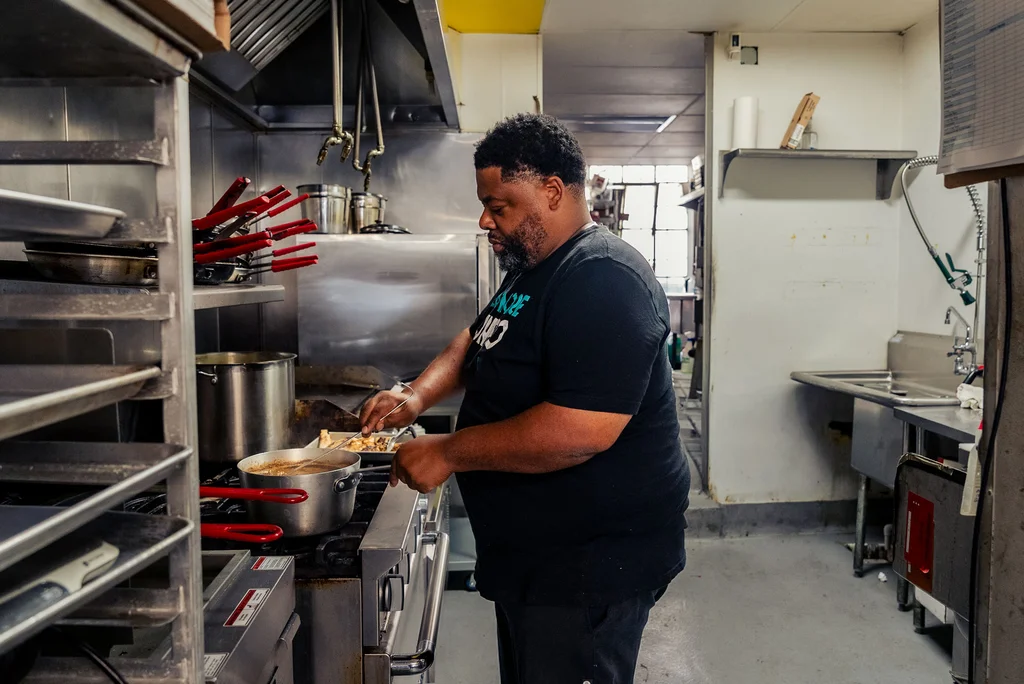
On Tuesday, the credit card company debuted its new campaign platform, called “Dreams,” which will run across linear and connected television, social, streaming audio, and programmatic display. “Dreams” is timed to air in the months leading up to the New York City marathon, which is run on the first Sunday in November, and that’s because Mastercard is putting the spotlight on two Brooklyn-based operations: The Meat Hook, a butcher shop, and Noble Signs, a design studio that makes vintage signs.
“What we wanted to recognize was the tenacity and determination. But we didn’t want to just celebrate it, we wanted to actually tell that story,” Jill Kramer, Mastercard’s chief marketing and communications officer, tells Fast Company. “What’s actually priceless is building that dream business.”
Rethinking ‘Priceless’
That final line is a reference to Mastercard’s most iconic ad campaign, “Priceless,” which debuted in 1997 and aired during the Super Bowl and has had creative partnerships with Major League Baseball, Formula 1, and the Grammy Awards. “Priceless” has had such strong cultural relevance that it has been parodied on Saturday Night Live and The Simpsons.
“Dreams” presents a fresh opportunity for Kramer to showcase a different side of Mastercard’s story, flipping the script to focus on the people behind the businesses that sell to consumers. Kramer joined Mastercard last December after 10 years at the consulting firm Accenture, succeeding Raja Rajamannar, who held the marketing and communications role for 13 years.
“I felt a lot of responsibility to be true to the heritage, but also, I said to my leadership, ‘Can I interrogate Priceless?’” says Kramer. Commerce, she says, shouldn’t be a narrow story, and within the broader sector, Mastercard’s new CMCO says advertising has a tendency to get stuck in a “sea of sameness.”
Breaking out of the ‘sea of sameness’
The financial services industry’s advertising frequently focuses on what banks and credit card companies can make possible for a consumer: buying a new home, funding travel or enjoying cultural events, or aspirational goals, like supporting investments or retirement.

“We wanted to recognize that creative challenge,” says Kramer. In the future, her intent is to take the “Dreams” concept into international markets and feature local businesses across markets like the U.K., Brazil, or Singapore. The global advertising and marketing agency McCann played a creative role with Mastercard for both the “Priceless” and “Dreams” campaigns.
But in the United States, Mastercard’s campaign comes at a challenging time for the economy’s small businesses, which employ 62.3 million Americans and account for nearly 44% of the nation’s gross domestic product. Rising costs from tariffs badly hurt manufacturers, wholesalers, and retailers, though some of these companies will get relief through refunds after the Supreme Court ruled against President Donald Trump’s import tariffs in February.
Another issue these small business owners face is related to the high costs associated with labor. Despite fears that the wider adoption of artificial intelligence will result in fewer jobs, especially for white-collar workers, the American job market is fairly tight.
Workers and employers aren’t on the same page when it comes to the skills that are most desirable, which is driving up wages. Nearly one out of four small businesses surveyed by the National Federation of Independent Business reports that “labor quality or availability” is their top operating problem.

A marathon-day spending boom
With these pressures in mind, another element of Mastercard’s “Dreams” campaign involves data sharing and a digital guide called “Race Ready” that the company will share with local businesses that sit on the New York City marathon route. The insights include the finding that bars and restaurants near the race see a 22% increase in spending on that day—according to 2025 data—versus the normalized trendline, according to Mastercard’s chief economist, Michelle Meyer.
Demand especially spikes between 2 p.m. to 4 p.m., when peak spending can leap by up to 40%. Meyer says sharing this economic data can help small businesses make concrete plans around inventory and staffing to take advantage of the sales boom. “In a world where energy prices are moving quickly, it is harder to navigate that and plan in that environment,” Meyer tells Fast Company.
Another pressure is related to cybersecurity; Mastercard’s survey shows that 46% report that they’ve experienced a cyberattack. That theme was highlighted in the “Dreams” ad spot that focused on Noble Signs.
“We see a big rush to embrace technology, particularly when it comes to AI, and small businesses are playing a role in that as well,” says Meyer.
investment News

