
Keurig has brewed up a new kind of coffee pod: First look at the plastic-free Alta brewing system
- Investment Opportunities Markets
 Peter Lynch
- 11 minutes read
The history of in-home coffee making is a story in and of itself. Over the past century, home coffee brewing has evolved from simmering pots and boiled water to percolators and, in the 1970s, the automatic drip machine, which became a fixture of modern kitchens.
But then the industry saw another shake-up with the introduction of single-serve coffee, which hit the mainstream when Keurig introduced its single-cup brewing system and K-Cups in 1998.
Keurig and its machines have since become ubiquitous. They’re in hotel rooms, conference rooms, and roughly 47 million households in the U.S. and Canada.
In the subsequent 28-year stretch, Keurig has partnered with nearly every recognizable coffee brand to produce K-Cups, and has introduced numerous machines to the market. But the product and technology—single-cup brewers and K-Cups—remained unchanged.
Now Keurig has something new brewing.
Keurig goes plastic- and aluminum-free
At the end of September, Keurig will officially unveil the Keurig Alta system and the next iteration of K-Cup pods, called AltaRounds.
The entirely new system has been several years in the making and, perhaps most notably, it removes plastic and aluminum from the equation. AltaRounds, which are effectively the “new” K-Cups, do not use any plastic or metal and instead are fully compostable.
The Alta system was initially teased in 2024 as “K-Rounds.” Several redesigns later, K-Rounds evolved into AltaRounds and the new Alta system brewing machines.
Alta brewers feature some big upgrades over their older Keurig counterparts. They not only produce less waste (something that has attracted criticism of the brand over the years), but also can make espresso drinks and barista-style beverages in addition to traditional drip coffee.
The AltaRounds are also something of a feat of engineering, developed after several years of trial and error.
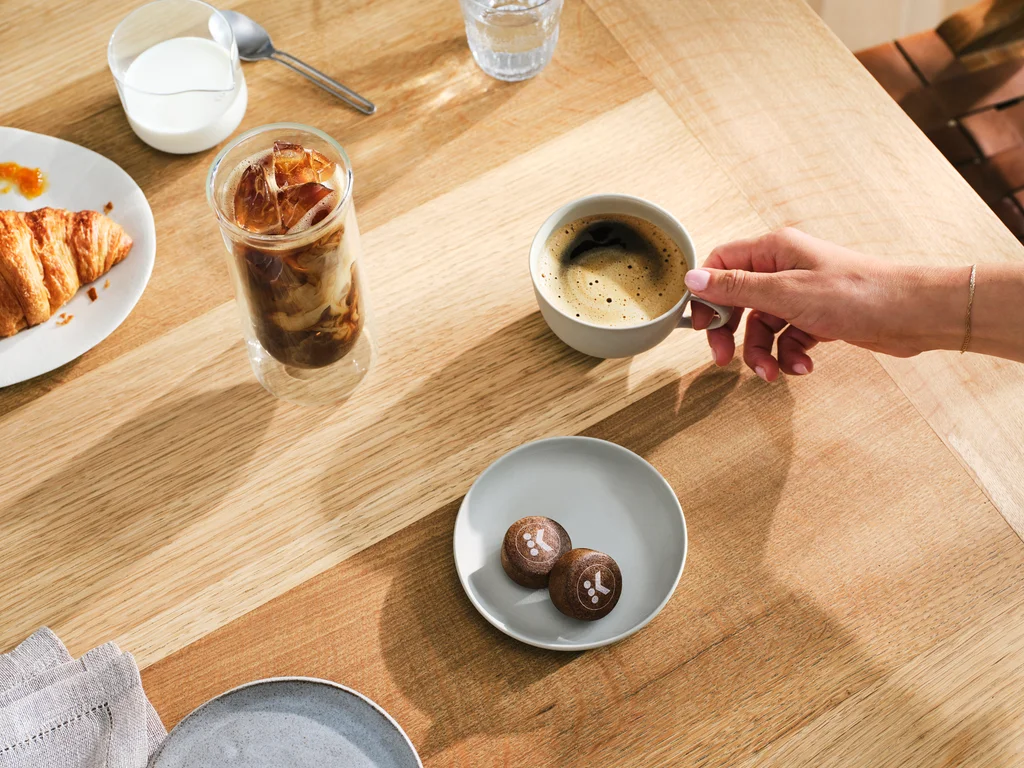
They resemble small hockey pucks made out of pressed coffee and espresso, and are wrapped in a proprietary, plant-based coating. They’re individually wrapped for protection, and when the system goes on sale later this year, there will be six Keurig-branded varieties available: two espressos, a caramel-flavored option, and classic light, medium, and dark roast coffees.
It will also include participation from Peet’s Coffee, which Keurig Dr Pepper acquired earlier this year.
And it will be backward-compatible, meaning the Keurig Alta will, initially, be able to make a beverage using both K-Cups and the new AltaRounds, in various sizes.
Phil Drapeau, SVP of future coffee systems at Keurig Dr Pepper, says the new Alta system is the result of an itch to innovate—lest Keurig, once a disruptor, itself become disrupted.
“We had a mindset, at the management level, of if we’re not willing to go disrupt ourselves, somebody will disrupt us, and that’s where the idea of a next-generation system was born,” Drapeau says.
“It wasn’t necessarily an idea to go do a plastic-free pod,” he adds. “It was more of a question of where is the category headed? Where is the consumer headed? Where do we need to be to continue to lead in the single-cup category, and continue to lead the coffee category in North America for the next 20 years?”
Keurig saw stagnating growth in the mid-2010s, so the company identified and focused on a few key trends when determining what to do next, Drapeau says.
Specifically, consumers want more variety. They’re drinking more espresso, they’re a bit choosier about their coffee and the quality of their drinks, and they aren’t crazy about waste, especially plastic.
The concern among Keurig’s leadership was that if Keurig wasn’t going to capitalize on the changing preferences of consumers, then someone else would.
Accordingly, the team got to work. “That’s where it all started,” Drapeau says. “We put a stake in the ground to say that we were going to be in charge of our own destiny.”
Developing the Alta
The initial discussions about the next-generation brewer and evolution of K-Cup pods took place in 2020 and 2021, and early development focused mostly on developing the new pods—which would eventually become AltaRounds.
That was an intricate process that involved close collaboration between design and engineering teams. The new pods would need to work with a new brewer, and the brewer would need to be engineered to effectively brew the AltaRounds.
Engineering the AltaRounds took place in the company’s headquarters in Burlington, Massachusetts, just outside of Boston (though, going forward, they will be produced in the company’s much larger complex in Spartanburg, South Carolina).
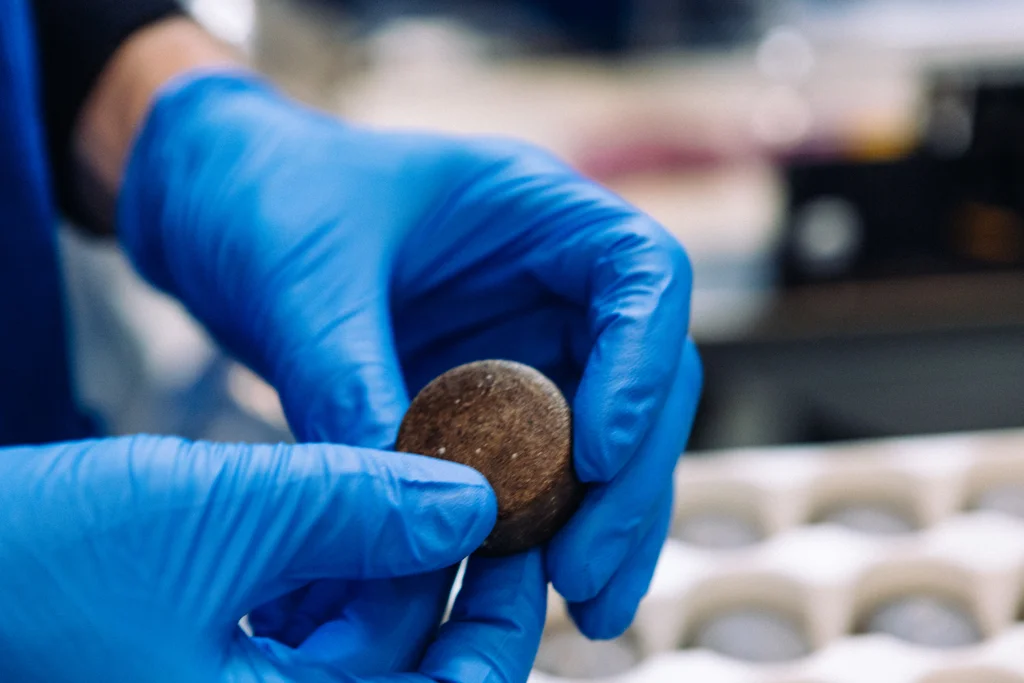
Technicians hand-pressed coffee into different shapes and sizes, dipped them in different coatings, and small assembly lines were created to see what worked and what didn’t.
The breakthrough came with the discovery of a suitable plant-based coating that could wrap each AltaRound.
“We were exploring different coatings, like corn protein, shellac, and beeswax, which ultimately didn’t work because they’re not plant-based,” says Neha Mallik, senior director of product development at Keurig.
Then, Mallik says, the team started experimenting with alginate, a type of coating that’s derived from seaweed. They found a Swiss company, CoffeeB (a subsidiary of Delica), that had developed and brought to market alginate-coated coffee capsules.
“When CoffeeB launched a little ball coated in alginate, and we saw that they were already doing it and had commercialized it, we decided to pick up the phone and give them a call,” she says.
Keurig licensed the alginate technology and processes from CoffeeB, and with that had found a solution to its coating problem. AltaRounds are coated in an alginate made from brown seaweed harvested off the coast of France.
The geometry of the AltaRound presented another issue, and the team experimented with various shapes, including teardrops and leaves. The ball shape, used by CoffeeB, wouldn’t work, as a Keurig brewer would likewise need to grow in every dimension to house different sizes.
“Our brewing engineers took one look and said, ‘The brewer’s going to be the size of a refrigerator when we’re done,’” Drapeau says.
They landed on the puck shape, which mimics how ground espresso beans are pressed into a commercial espresso maker in a coffee shop by a professional barista. The shape has a fixed diameter, but can have different heights for more or less coffee, allowing for larger or stronger drinks.
A brewed awakening
The idea was to bring a barista’s hand into a consumer’s home—without having to worry about grinding, brewing, and temperatures, but delivering a coffee shop-worthy drink, says Alberto Azeredo, senior director of R&D at Keurig Dr Pepper.
“You need to define how you roast for taste, and the grind has an important impact on taste as part of the extraction,” Azeredo explains. “All those things need to come together, and for the consumer, they don’t need to think about it.”
The development of the Alta system has amounted to an investment of hundreds of millions of dollars. And so far, people seem to like it, according to Sarah Sperling, director of brand management for future coffee systems at Keurig Dr Pepper.
“[People] want a barista-style cup of coffee that they can make at home, and they don’t want it to be messy or complex,” Sperling says, noting that consumers should come to think of Keurig as a high-quality coffee option as much as a convenience.
“I think [we have] been building our credibility behind being a coffee company, not just a Keurig Brewer company,” she says.
As they prepare for the Alta system’s launch, Keurig’s leadership is confident that they have the next big thing in coffee on their hands, though they do anticipate a ramp-up period.
That will include getting brands on board (there are hundreds of K-Cup options out there, from dozens of brands). Consumers may not be willing to give up their K-Cups immediately, either, even though the Alta system will be backward compatible.
Though there will be hurdles, Drapeau believes coffee drinkers are going to recognize the difference.
“This is completely elevating the at-home consumer experience, and we’re doing it the right way,” Drapeau says. “We’ve made significant decisions around things like waste and relative to the way the coffee’s prepared, the taste of the coffee, and doing it right by the broader ecosystem of coffee.”
He adds: “We’re committed to the new system, and we’re going to keep making it better.”
investment News

