Spotify founder’s body scan startup designs a new kind of clinic

Trump loves good ratings. He won’t find them on ‘Trump TV’
- Investment Opportunities Markets
 Peter Lynch
- 4 minutes read
You can start a state television network, but you can’t make people watch.
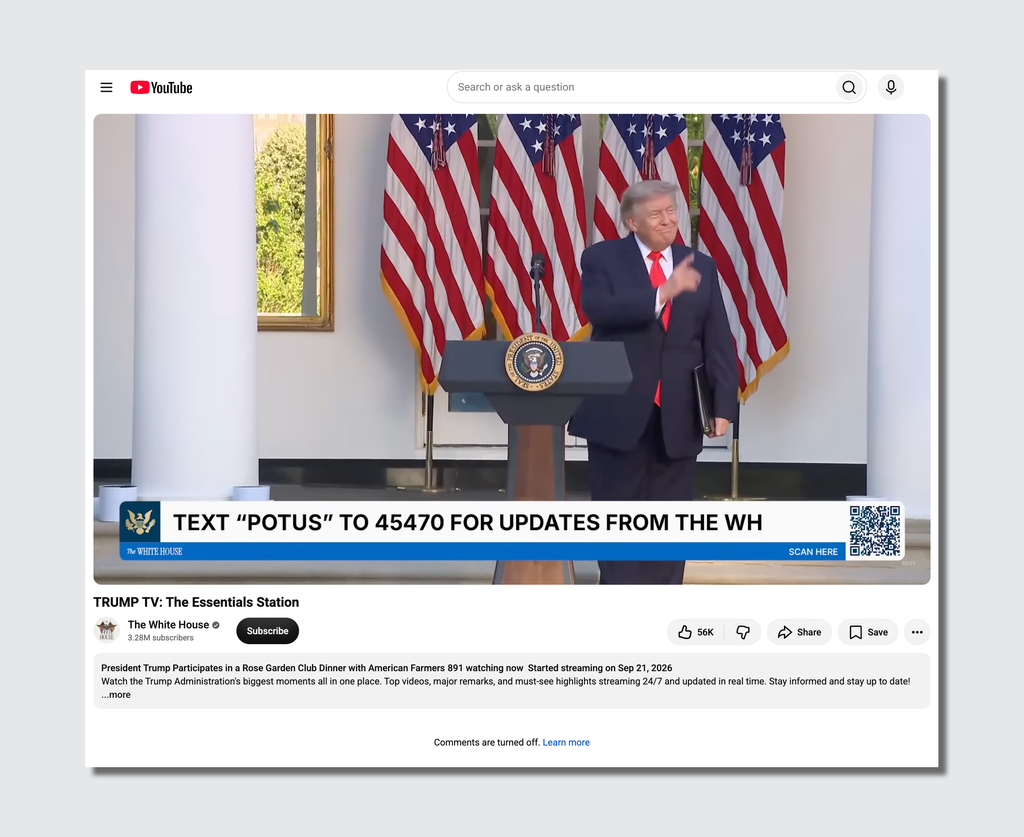
President Donald Trump’s White House this week launched Trump TV, a 24/7 YouTube livestream of new and recycled Trump speeches and other administration events—but initial viewership has been low, and the content isn’t very compelling. Its slow start shows in real time how hard it really is to establish state media, even for a former reality TV producer like Trump.
The Trump administration debuted Trump TV on Monday as a supposed replacement for news outlets CNN, MS NOW, and Politico, which Trump banned from the White House the previous Friday. Its logo, an all-caps wordmark in a forward-leaning sans-serif font, recalls a similarly styled logo for Trump’s short-lived airline. Its sizzle reel, meanwhile, treats private IP as property of the state by running unauthorized clips from shows like Seinfeld, SpongeBob SquarePants, Family Guy, and The Simpsons while the text “TRUMPTV” flashes and repeats on the screen.
Big news, low ratings
While the White House X account hyped the channel as “the latest and greatest from the administration all in one place,” the experience of watching it so far has been more like putting videos from Trump’s C-SPAN profile page on shuffle, but with less context.
Videos are shown without any information about when or where they were filmed or what it is you’re actually watching. And unlike an independent, fully operating media outlet, it also doesn’t cut in with live events. When Trump spoke at the United Nations General Assembly on Monday, the livestream instead aired Trump’s remarks at the 74th National Prayer Breakfast back in February. When he held a bilateral meeting with Ukrainian President Volodymyr Zelenskyy on Tuesday, the channel was instead streaming his bilateral meeting with U.K. Prime Minister Andy Burnham, which occurred earlier in the day.
“America doesn’t have a state media system, and a YouTube channel by Trump is not the same thing as state media,” Sarah Ann Oates, a professor at the University of Maryland’s Philip Merrill College of Journalism and an expert on media, authoritarianism, Russian propaganda, and disinformation, tells Fast Company.
Most countries invest heavily in a professional broadcaster that’s financed by the state, she says, and that creates problems if there’s a political takeover of state media, which often happens. Still, it can’t just be created overnight.
investment News
Donald Trump,government,Government design,livestream,Marketing,YouTube

