Bitcoin Price Hits $87,000 as Trump Proposes $5B to Rebuild Gulf Sites Hit by US-Iran War

Levi’s, Marks & Spencer launch a collaborative effort to get fashion suppliers on renewable energy
- Investment Opportunities Markets
 Peter Lynch
- 8 minutes read
When it comes to making the fashion industry more sustainable, there’s only so much a brand can change about its own actions. Around 70% of the industry’s total emissions come from upstream activities in supply chains, like fiber and fabric production.
That means for fashion brands to really meet their climate goals, they have to help their suppliers become more sustainable, too.
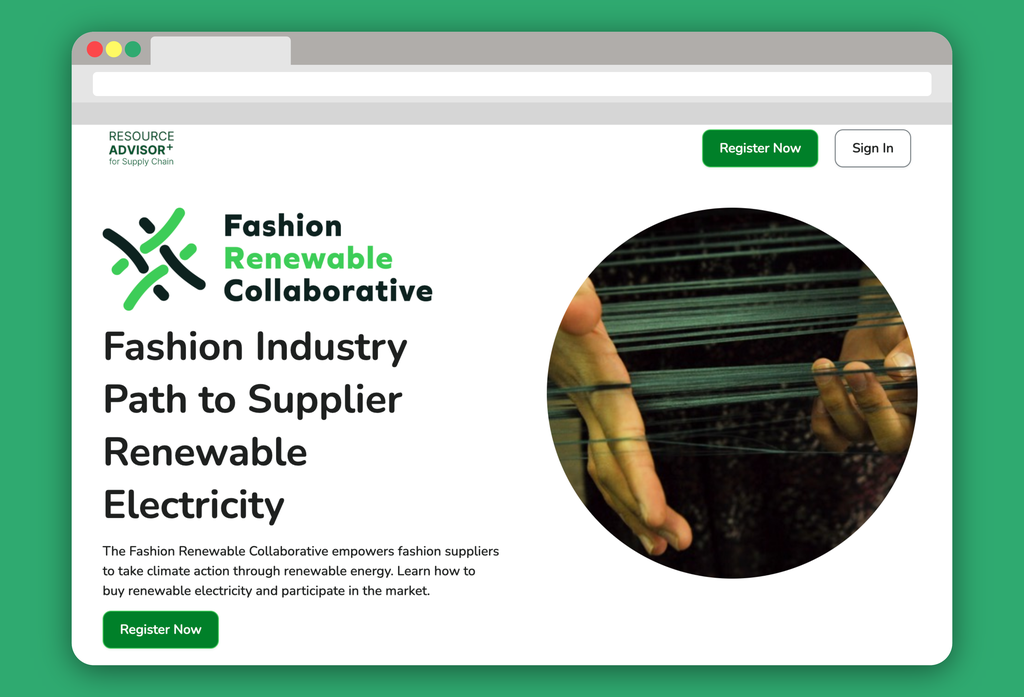
Now, Levi Strauss & Co. and Marks & Spencer are launching an effort to do just that, called the Fashion Renewable Collaborative.
The program, in partnership with Schneider Electric’s SE Advisory Services, aims to get multiple brands on board to help fashion suppliers switch to renewable energy—a key step to decarbonizing the apparel sector.
Shared supply chains
The Fashion Renewable Collaborative is similar to a program Levi’s launched itself last year, called Levi Energy Accelerator Program, or LEAP. Also in partnership with Schneider Electric, LEAP focused on helping the brand’s garment manufacturers in India learn about and access resources for renewable energy procurement.
Levi’s soon learned that British retailer Marks & Spencer was doing something similar through a program called Re: Spark. That sparked a realization for Jennifer DuBuisson, Levi’s senior director of sustainability.
“We can each continue to keep doing this on our own, but at the end of the day, we have shared supply chains,” she says. “Suppliers are already facing such fragmentation from different brands.”
Marks & Spencer and Levi Strauss began talking about how they could do their efforts on an industry-wide scale.
The idea, DuBuisson says, was to “create an opportunity where we don’t have more brands coming to the same suppliers, all asking for something maybe similar but slightly different, and just ultimately creating noise in the system.”
Addressing these supply chains is a key lever to pull for brands looking to clean up their carbon footprints. At Levi’s, for example, more than half of the company’s total emissions are Scope 3, meaning they come from the company’s upstream supply chain as well as its downstream transportation and product use.
Fashion suppliers face transition challenges
Levi’s has a goal to reduce those absolute Scope 3 emissions 42% by 2030. When the company looked at its climate plan, it realized that incentivizing renewables was key to that goal. (Levi’s says it hit 100% renewable electricity in all company-operated facilities in 2025.)
But fashion suppliers face their own challenges to transitioning to renewables, and things get complicated when multiple brands all have their own climate goals.
“Fashion’s supply-chain emissions challenge is too large and too complex for brands to address one supplier at a time,” Dave Rimkus, head of global supply chain decarbonization at SE Advisory Services, said in a statement. “Suppliers are being asked to deliver against multiple climate targets while navigating very different energy markets, financing constraints and renewable electricity options.”
Suppliers may be spread across different geographical regions, which each have their own economic, regulatory and market considerations to renewable energy purchasing.
Navigating the energy side of the business can also be too high level for some suppliers—especially when it comes to tasks like Virtual Power Purchase Agreements, or VPPAs, which often require getting bids from multiple renewable energy developers.
As part of its LEAP program, Levi’s learned that it “really needed that on the ground, one-on-one support for those suppliers in their local language to help them really understand,” DuBuisson says. Schneider Electric provides that direct support.
Cost can also be a friction point, but by working with multiple suppliers, the Fashion Renewable Collaborative hopes to more easily reach economies of scale.
“By creating a program like this, we’re able, hopefully, to aggregate the demand across our suppliers, such that a supplier who has a smaller demand or it wasn’t economically viable [to switch to renewables] will be able to get renewable electricity at a much more cost competitive rate,” DuBuisson says.
How The Fashion Renewable Collaborative will work
The Fashion Renewable Collaborative includes a few elements.
First is engagement: When suppliers come into the program (at no cost to them), they’ll have access to a digital platform where they can see which brands they’re supplying to. That reduces some of the repetitive information they might have to share.
Once they’re in the program, there’s an educational series with information on renewable energy and the specifics of their jurisdictions, and market guidance around purchasing and procurement. Schneider Electric will help procure bids from developers and handle RFPs.
The program will offer different solutions for switching to renewables, based on what a supplier wants and is able to do. Some may be interested in renewable energy credits, while others may want to explore power purchasing agreements. Then there are options like on-site solar or on-site battery storage.
Suppliers will fill out “feasibility assessments” to help figure out which solutions make the most sense for them. “Then we’re able to come to the table and say, okay, here’s what we think is the best opportunity for you with a strong business case,” DuBuisson says.
The Fashion Renewable Collaborative officially launched during Climate Week and between Levi’s and Marks & Spencer, there are already more than 450 facilities engaged in the program.
The collaborative is already in talks with other fashion brands and hopes to bring more of them, and their suppliers, on board. It’s that collaborative effort that DuBuisson says can make the biggest impact.
“The shared supply chain is so critical,” she says. “I think this ‘go it alone’ approach creates a lot of noise and a lot of fatigue for the suppliers, and so we just need to start working smarter and working more collectively together to realize the change opportunity.”
investment News

