Why Alan Cumming and Campari want you to ‘stay bitter’ for Negroni Week

This tote bag turns into a life jacket just in case the subway floods
- Investment Opportunities Markets
 Peter Lynch
- 4 minutes read
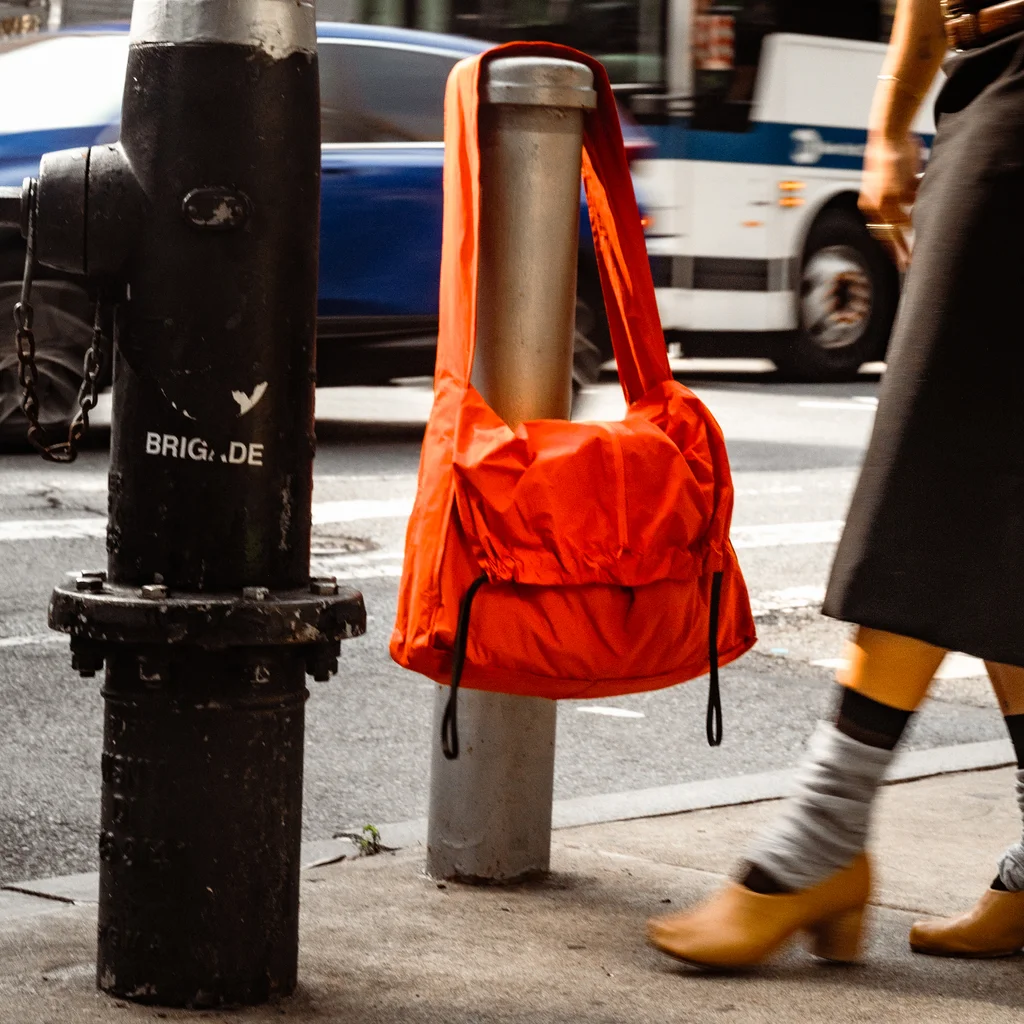
A new tote bag has a hidden feature: In a flood, it doubles as a life jacket. Most of the time, it’s an ordinary bag. But in an emergency, you can unfold it into a vest, slip it over your head, and tug a cord to inflate it.
The conceptual product, designed by a collective of artists, points to the absurdity of adjusting to life with climate change. “The whole premise of this thing is, why the hell should this even exist?” says Phil le Brun, one of the creators behind the project.
Le Brun and his collaborators started working on the project, called Lifeline, after seeing the impact of flooding on the New York City subways. The subway’s aging infrastructure can easily get overwhelmed by water, and as climate change has led to heavier storms, the problem is getting worse. Riders occasionally have to cling to walls to make it through a flooded station or wade through knee-deep water.
One 2025 video shows a train pulling into a station as water gushes onto the platform and some starts to seep into the train. Some passengers gasp, but some also seem unfazed. “We’ve reached a point that I think we’ve sort of normalized that this is just completely otherworldly and dystopian,” le Brun says.
That can be said for almost any climate impact, whether people have started to consider it normal to live with wildfire smoke, heat waves, more intense hurricanes, or even disintegrating mountains. It’s not clear exactly how severe the risk is of catastrophic flooding in New York’s subways, where the MTA has invested billions in resilience efforts since Hurricane Sandy in 2012. (In China, with different infrastructure, a disaster in 2021 flooded a subway tunnel and killed 14 people aboard a train.)
The artists wanted people to think about how climate change is already reshaping everyday life. They also wanted to question what makes sense as a solution—including the way that designers approach problems in the first place. The tote bag is a provocation, not a product. Industrial designers “are really looking always to solve problems, and we pretend we can solve them individually with one product or one solution,” says Gabriela Mestriner, an architect who worked on the project. The actual solutions are obviously more complex. In the case of subway flooding, they range from infrastructure redesign to much bigger political changes to aggressively cut emissions of greenhouse gases.
“At the moment, the system and the overarching government just feels completely at odds with what’s happening and what we’re seeing in the world in terms of climate emergency,” says le Brun.
investment News

