Bitcoin Investors Send BTC to Exchanges at Loss After CLARITY Act Failure

Experts say Trump ballroom interiors represent ‘historic monarchies’ over American ideals
- Investment Opportunities Markets
 Peter Lynch
- 3 minutes read
If President Donald Trump has his way, a building called the People’s House in the capital of the longest-standing democracy could one day get an annex with interior design meant to resemble a seat of power for a European king, authoritarian, or czar. Or at the very least, a hotel and casino themed to look like one.
Trump shared renderings of the interior of the disputed White House ballroom on his social network on September 13. The renderings depict a space that looks more Moscow or French Baroque than D.C. or even Mar-a-Lago.
Expansive hallways with large windows stretch beneath tall ceilings ornamented with chandeliers. And—of course—there are gold accents throughout. Rather than the neoclassical look associated with federal architecture in the nation’s capital, the design recalls the extravagance of Moscow’s Grand Kremlin Palace.
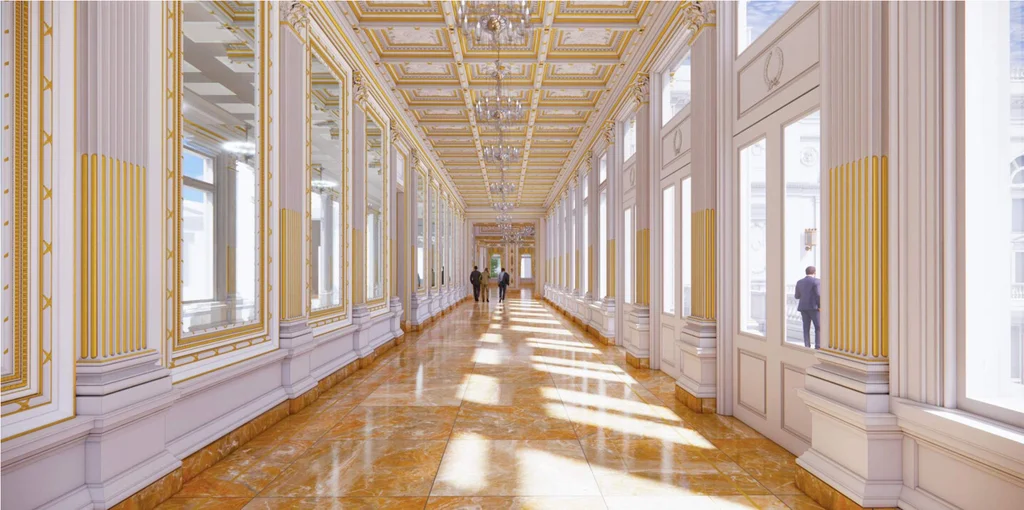
“The ballroom looks like a whitewashed version of Versailles,” says Annie Elliott, a Washington, D.C., interior designer. She characterized Trump as a wannabe Louis XIV, who ruled France from the palace just outside Paris from 1643 to 1715.
While the opulent, gold interior design isn’t surprising considering Trump’s tastes and ongoing renovation projects, it certainly doesn’t look like the D.C. we’ve come to know.
The architecture of the White House is deliberately restrained in scale and style to reflect the American republic’s democratic ideals, argues Jorge Salgado, cofounder and principle at Pelletier Salgado Architects. Part of its beauty is the fact that a powerful president lives in a relatively modest building. Meanwhile, Trump’s renderings look like a European copy that borrows visual symbols of power and wealth.
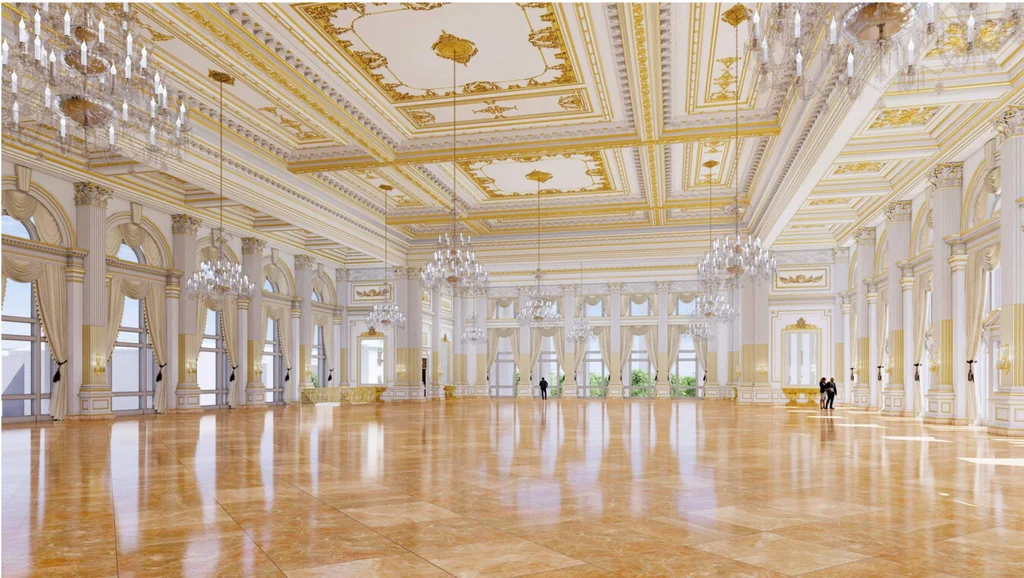
“Based on the renderings alone, this structure, like the grand palaces of historic monarchies it obviously evokes, is meant to project power, and its design is saturated with what those of us in the profession would call pastiche,” or imitation, Salgado says.
investment News
architecture,interior design,trump,White House

