AI’s productivity boom will likely create a ‘winner-takes-all’ economy, top EY economist warns

The perfect pillow does exist. It just might take you a while to find it
- Investment Opportunities Markets
 Peter Lynch
- 14 minutes read
One morning in the middle of the summer, I woke up to an excruciating pain searing through my neck and left shoulder.
I immediately booked a deep-tissue massage, but the relief lasted a day before the ache returned. After a few weeks of persistent discomfort, I visited my doctor who referred me to a physical therapist. After doing several tests, the therapist identified the culprit: my pillow. Since I’m a side sleeper, my head was collapsing toward the mattress, throwing my spine out of alignment. I was shocked that something so basic could be the cause of such physical misery.
I am far from alone in this struggle. Neck pain is a widespread issue around the world, affecting roughly 30% to 50% of adults annually. Studies show that poor sleep posture and inadequate cranial support are linked to chronic pain. According to spinal specialists, the way to avert this pain is to maintain a neutral spinal alignment, where the neck, shoulders, and spine form a continuous, straight line parallel to the mattress. It’s easier for back sleepers to achieve this goal, but side sleepers struggle. When a pillow fails to bridge the negative space between the ear and the shoulder, muscle strain, nerve compression, and joint misalignment are almost inevitable over the course of an eight-hour night.
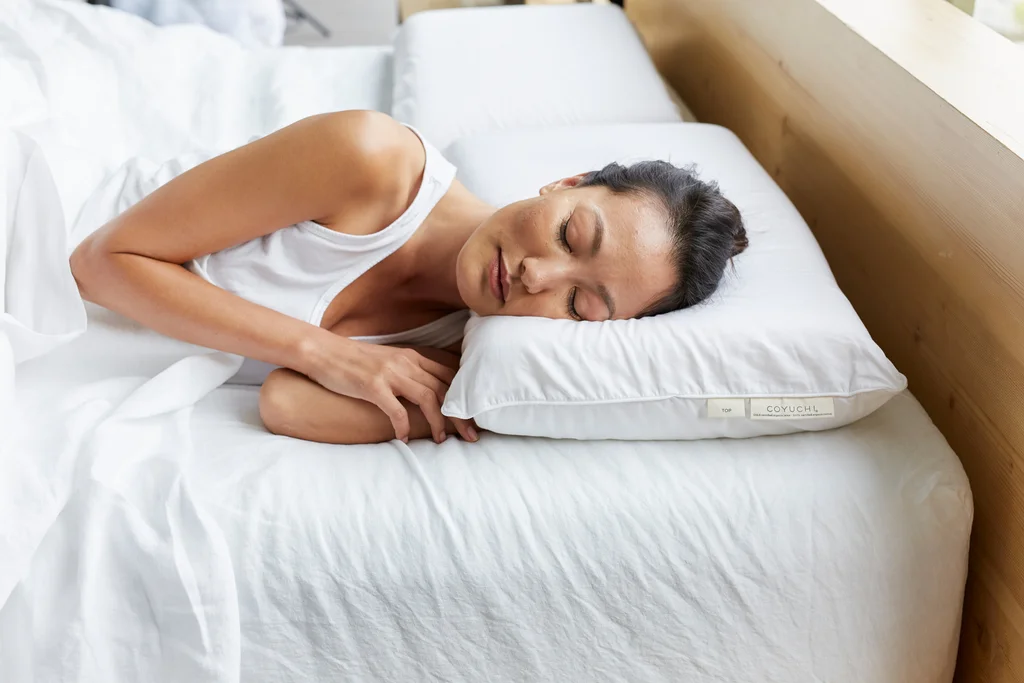
The good news is that bedding brands are on a quest to support your neck. Over the past few years, brands across the home goods industry have been mounting an effort to completely redesign the pillow. Incumbents like Tempur-Pedic were early pillow innovators, but a new generation of startups like Mellow, Parachute, Avocado, and Coyuchi are going back to the drawing board, rethinking the silhouette, construction, and materials of their pillows.
But crafting the perfect pillow is an extraordinarily difficult design challenge. No two bodies are the same when it comes to shoulder breadth, torso length, and head weight, and moreover, people have different preferences when it comes to their sleep posture. All this means there is no universal, one-size-fits-all solution to spinal alignment. But the wide range of options on the market mean that if you try enough pillows, you’re more likely than ever to find one that perfectly suits your body.
A brief history of the pillow
In the distant past, only the very privileged were fortunate enough to have something to rest their heads on. In ancient Egypt and Asia, pillows weren’t soft at all; the elite elevated their heads on carved wooden or stone headrests. In colder climates, people stuffed sacks with straw, cotton—or down feathers, for the wealthiest few—that were soft, but offered very little structural support. It wasn’t until the industrial revolution that companies mass produced pillows that were affordable enough for the masses.
For centuries, the basic concept of the pillow remained unchanged. The first major innovation occurred with the development of memory foam, which was originally developed by NASA in the 1960s to improve aircraft cushioning and safety. But shortly thereafter, companies began incorporating the material into mattresses and pillows, realizing that it could be molded into precise shapes to support the head and neck more effectively than loose feathers or cotton. One of the most notable was Tempur-Pedic, which launched in the early 1990s. The company is now the major incumbent in the world of ergonomic pillows, generating $7.7 billion in 2025, with more than 2,800 stores around the world.
But over the last few years, a new wave of brands has been pushing past memory foam to rethink the fundamentals of pillow architecture. It makes sense that companies are trying to get in on the pillow sector, since it is lucrative. The U.S. market alone was roughly $5.2 billion in 2025, according to Grand View Research, and is forecast to reach $8.5 billion by 2033. While traditional fillers like feathers remain the largest segment, latex—a moldable material derived from rubber sap—is the fastest growing, pointing to the fact that companies trying to innovate.
The new era of pillows
Among the brands driving this wave, Mellow has emerged as a runaway phenomenon. It launched in 2025, and quickly went viral on TikTok, becoming the highest-selling pillow on the social platform. It generated more than $110 million in sales in just nine months.
It makes sense that Mellow’s products have taken off on TikTok, a visual platform. Mellow’s pillows break from the traditional rectangular shape entirely. It has a wide range of pillows in shapes that look like whimsical clouds and marshmallows. But behind the eye-catching design is a lot of engineering to address body mechanics.
“What we’ve learned through this whole experience is that bridging the gap between your shoulder and your neck in order to keep your neck straight actually fixes a lot of problems,” explains Chad Keller, co-founder of Mellow. “There were ergonomic pillows that solved problems, but they weren’t visually pleasing. Our goal is to solve that gap.”

To develop its pillows, Mellow worked closely with chiropractors and sleep doctors to understand common sources of pain and how to fix them. The brand’s designers used these conversations to identify the wide range of factors that affect how someone sleeps from differences in anatomy to their preferred sleep position. Then they began to think about how they could address these issues through design. What sets the brand apart is that they did not feel bound to the traditional pillow silhouette.
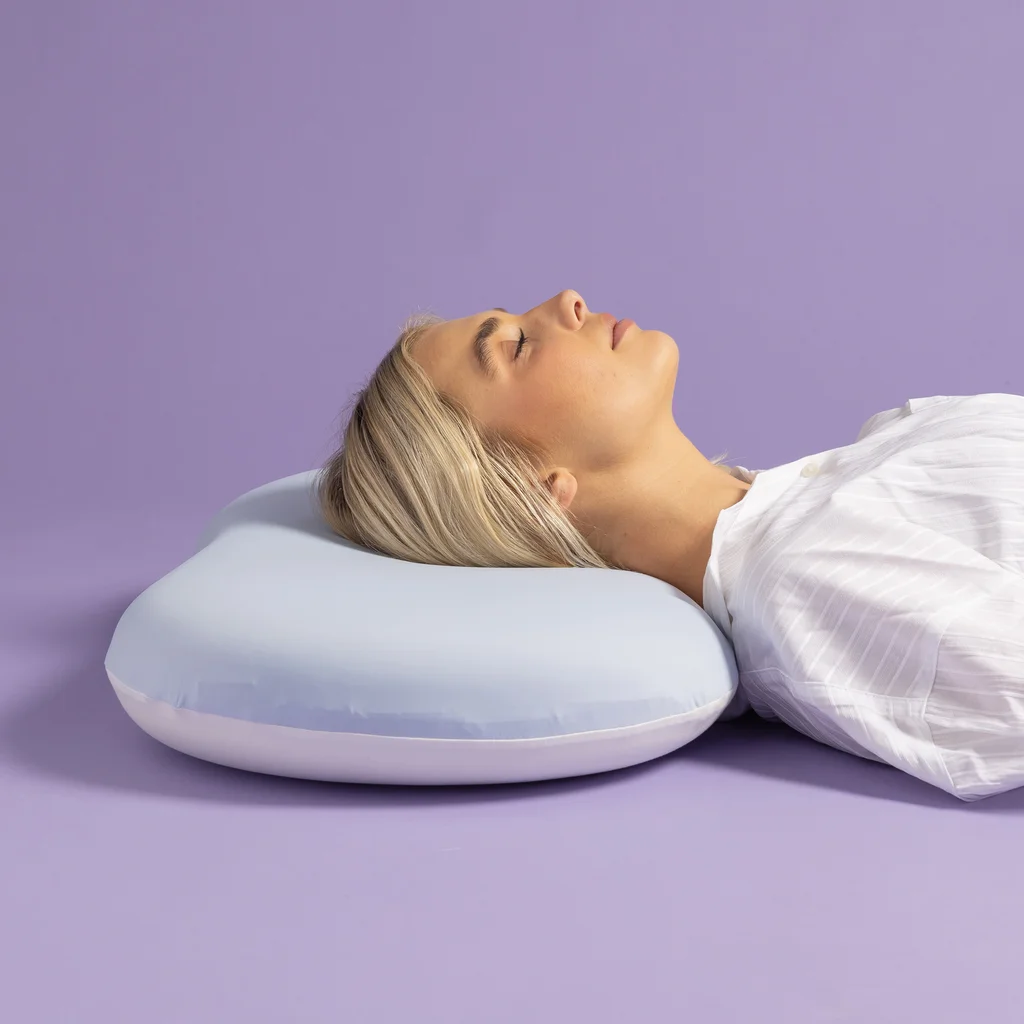
For instance, sleep specialists point out that to avoid neck pain, you need to cradle the neck. The issue is that back sleepers and side sleepers require support at different heights. And over the course of a night, someone might move from their side to their back. These insights led directly to the invention of the CloudAlign pillow, which does, in fact, look like a fluffy cloud with plump, rounded sections on each of the four corners. While it is visually interesting, each part is functional. Back sleepers can lie on the lower middle section, but side sleepers can lay their necks on the elevated corners. To make it even more versatile, the pillow is dual sided, with a high side and a low side, to accommodate different body sizes. “The Cloud pillow even considers the position of your arms, and can alleviate neck pain because your body is more relaxed when you sleep,” he says.
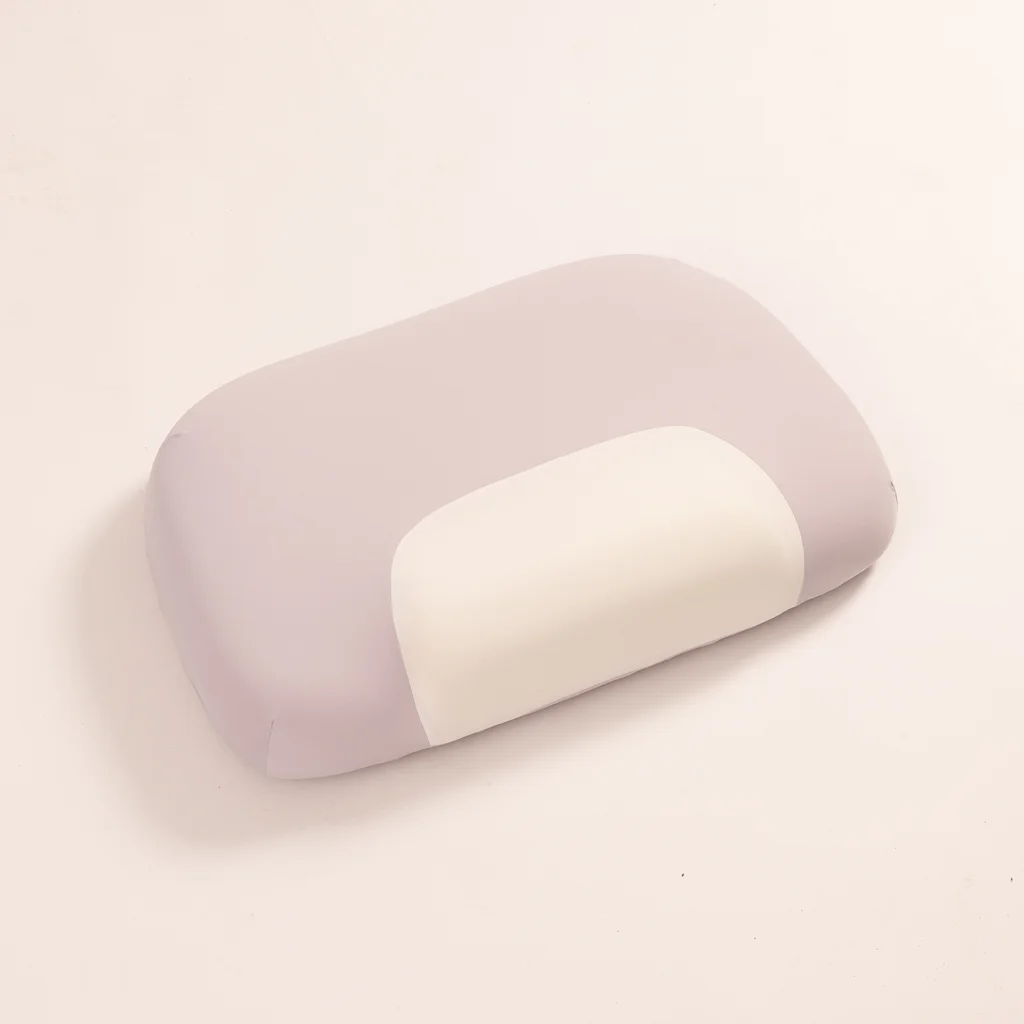
But the pillow that fixed my neck problem was the Halo Pillow, which is specifically engineered for people dealing with pain. This pillow is very dense and rectangular shaped, with different zones that have different levels of firmness. The extra firm zone is meant to stretch out your neck, allowing you to relax tense, compressed muscles. But you can flip over the pillow to a slightly less firm section that is slightly more comfortable if you’re not currently experiencing pain.
There are many other pillows in the lineup, including the Puff pillow which offers plush-cooling fabric for people who sleep hot—and is also interesting to look at, with quilted squares throughout that almost makes it look like a roll of bubble wrap. The fun aesthetic of Mellow’s pillows has made it particularly popular with Gen Z consumers, who treat them as accessories for their beds. But by combining functional chiropractic insights with striking visual designs, Mellow turned a utility item into a viral lifestyle product.
“As we sell these different products for side sleeper and back sleepers, and for people with neck and back pain, we can also begin to collect data and iterate on the design based on it,” Keller says. “Understanding why people are buying products from us is very important as we consider the design process.”
A more sustainable ergonomic pillow
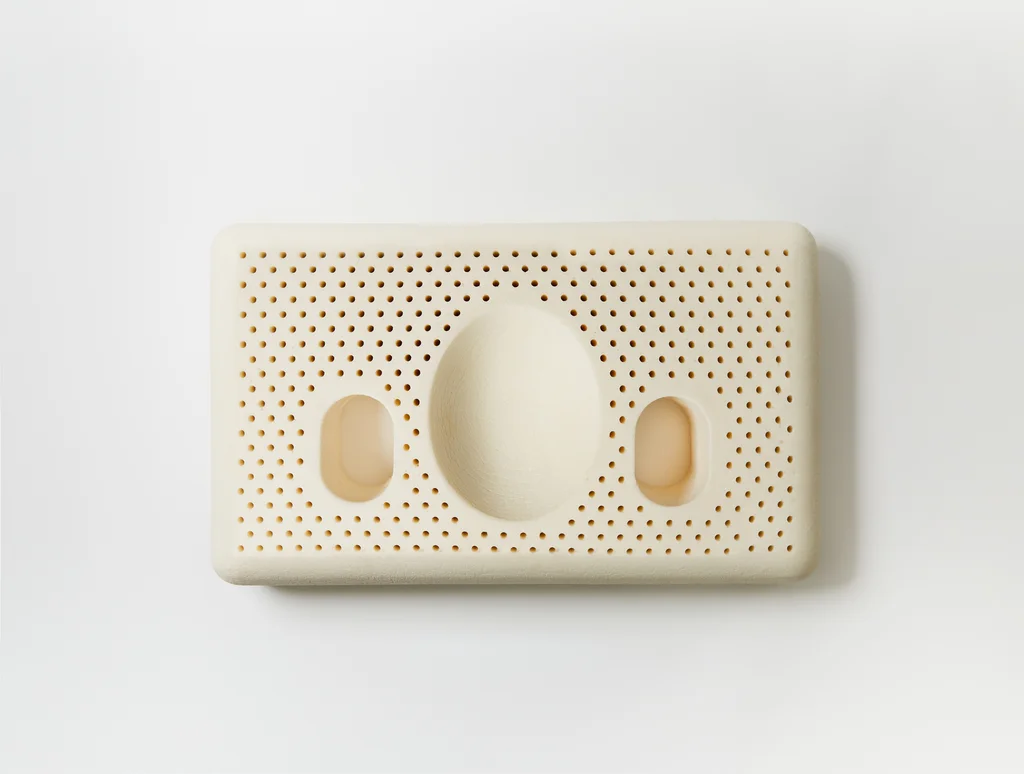
Coyuchi, a brand built on sustainability, had to get creative about creating a pillow that would provide anatomical support without relying on petroleum-based foams. Margot Lyons, the brand’s head of sustainability and sourcing, turned to latex, an organic material that is tapped from the sap of the rubber tree. Like memory foam, this material is durable and holds its shape, but it will fully biodegrade at the end of its life cycle.
To think through the design of the pillow, the brand collaborated with the late sleep expert Roger Sramek, who spent his career studying biomechanics, posture, and ergonomics to reduce pain and improve sleep quality. Together they developed a pillow with an unusual design, with holes on the surface to relieve ear pressure and support proper head placement.
“There’s a hole where you’re supposed to put your head if you’re lying on your back, and a hole for your ear when you’re sleeping on your side,” Lyons says. “All of this ensures that your spine is fully straight no matter how you’re sleeping.”
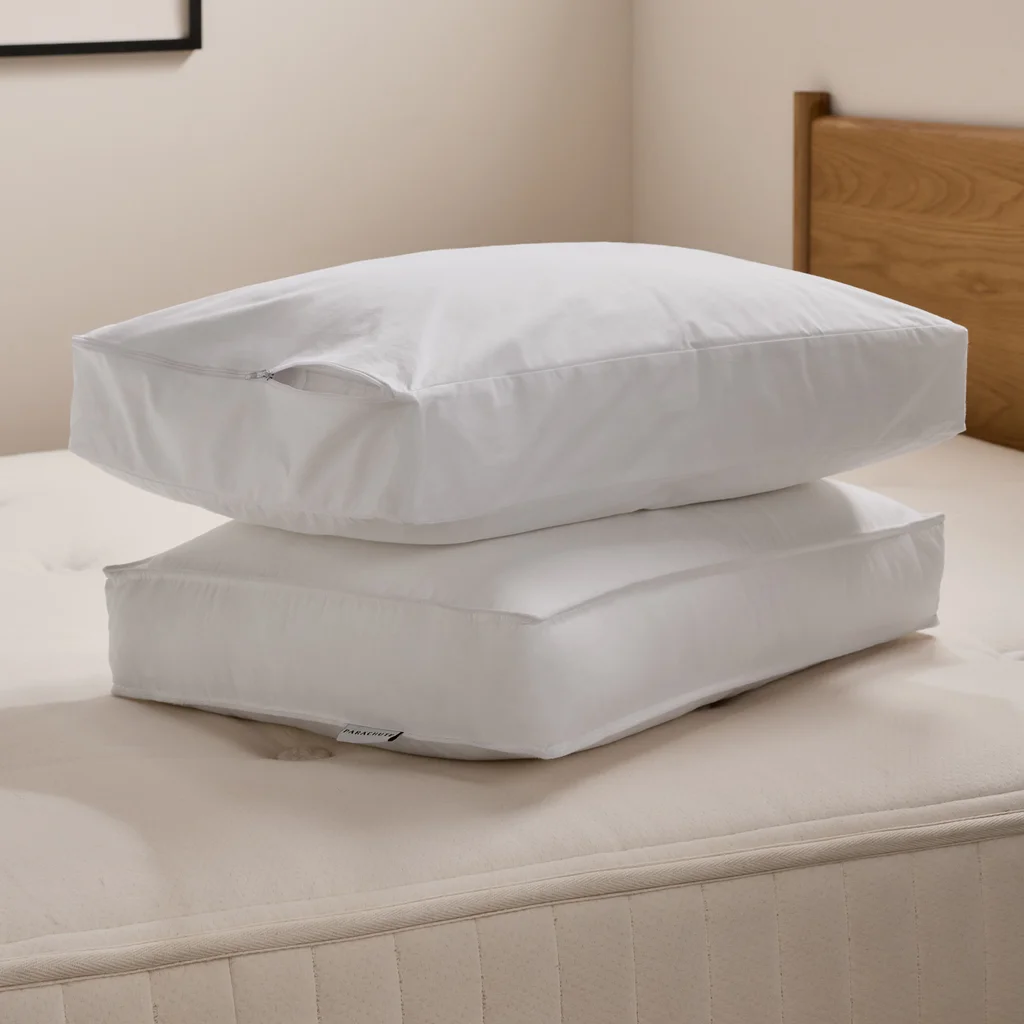
Parachute, another brand focused on organic materials, set out to explore if it could create an ergonomic pillow using down feathers, which have long been prized for their softness and breathability. However, they tend to compress and collapse over the course of an eight-hour night.
Amy Hoban, Parachute’s chief creative officer, spent years studying how customers interacted with traditional down through the brand’s regular focus groups. “We heard consistent feedback from side sleepers who loved the initial plushness of down, but found themselves waking up at 3:00 a.m. to fluff and fold their pillow because it had flattened out,” Hoban explains.
Side sleepers needed sustained support to bridge the gap between their neck and shoulder, but traditional down simply couldn’t hold up under consistent pressure throughout the night. To solve this without resorting to synthetic foams, Parachute’s design team engineered the Down Side Sleeper Pillow. It features a pronounced 3.5-inch side gusset to maintain height around the perimeter of the pillow. But the real innovation is a dual-chamber interior.
Inside the pillow, there is a dense core packed with sturdy feathers that serves as the core. Around it, soft European white down cushions the top and bottom outer layers. “You still get that soft down feeling when your head lies on it, but that inner chamber holds you up for the night and can withstand more pressure,” she says.
The widespread innovation in the pillow industry hasn’t produced a single winning pillow, but a wide range of pillows. And in many ways, this seems to be the right answer to the problem of human variation. There’s a dense slab of a pillow for someone who is in pain, a perforated latex block for someone who wants to ensure their ergonomic pillow will biodegrade, and a gusseted chamber for someone who will not give up the softness of down.
The real issue now is figuring out which one will work for you. In my case, it took me months of trial and error. I sent back many pillows that didn’t work—sometimes even made my pain worse—before finding the one that solved all my neck problems. What I learned is that the next innovation in the pillow industry shouldn’t be just another shape—but a way to match each body to the right pillow.
investment News

