
This nuclear startup and Halliburton repurposed oil drilling to solve the radioactive waste problem
- Investment Opportunities Markets
 Peter Lynch
- 12 minutes read
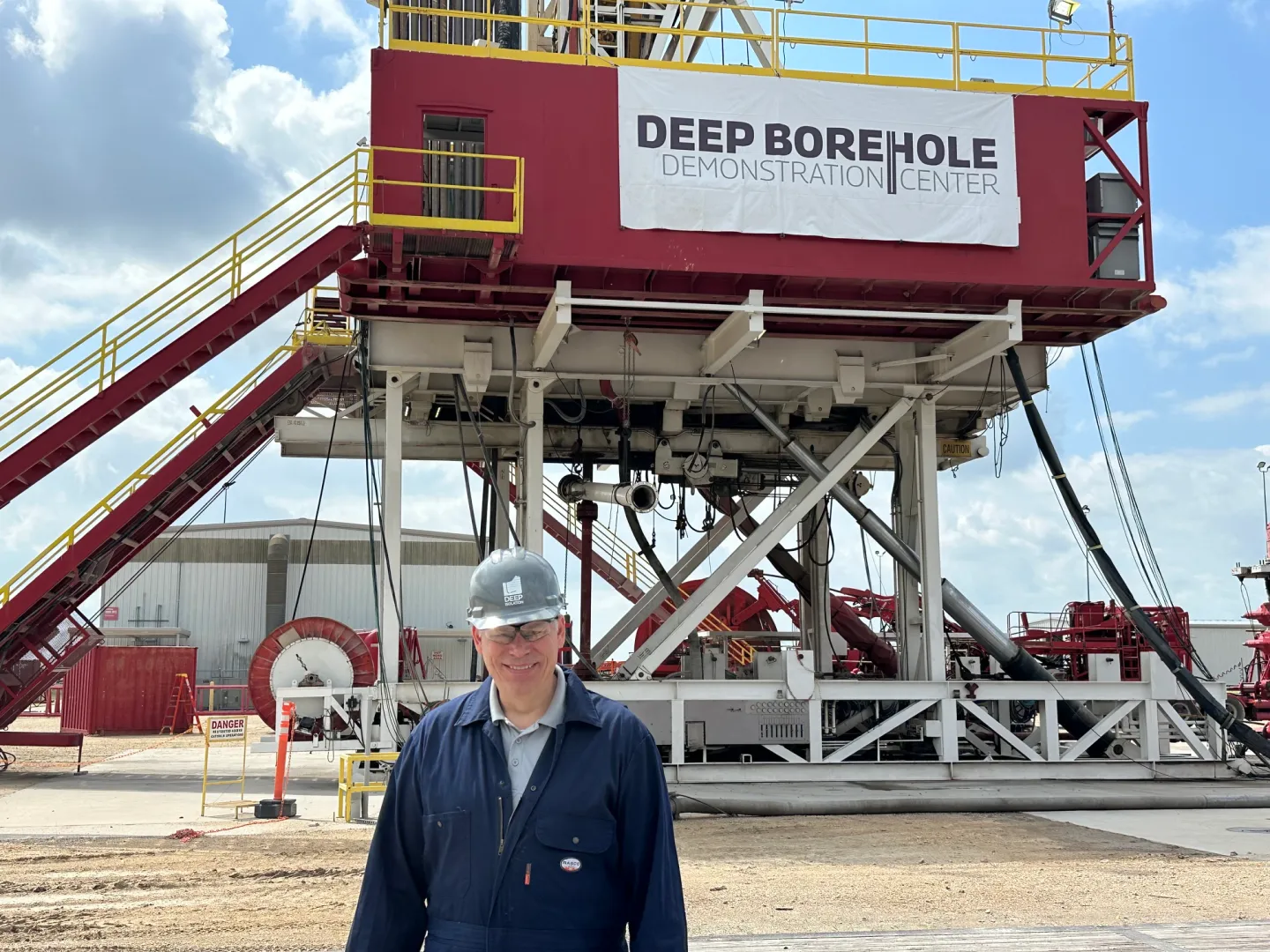
If you drive to the middle of nowhere in central Texas near Cameron—population 5,300—and down a gravel road, you’ll come upon a security gate with a sign stating, “Watch out for the cows.” The warning is no hyperbole, as cattle block the road, delaying the eventual sight of a massive oil-drilling rig.
A large, bearded man in red Halliburton coveralls and helmet says to beware of snakes and scorpions. “Not trying to scare you; that’s just part of the orientation.”
Welcome to the Deep Borehole Demonstration Center. The site is home to a partnership between the nuclear waste startup Deep Isolation Nuclear, the oilfield services leader Halliburton, known for its drilling and fracking expertise, and others.
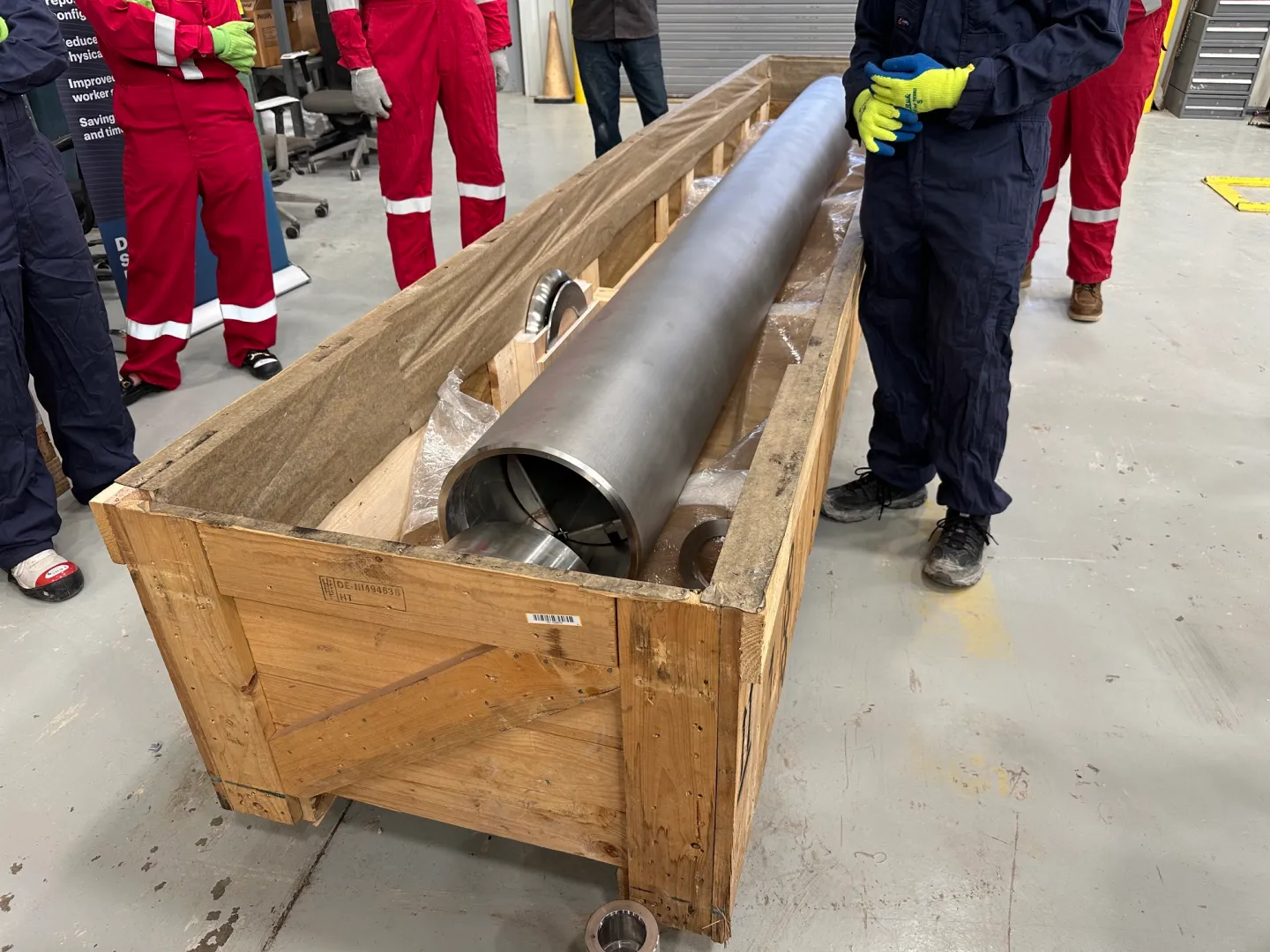
The goal is to solve the nation’s nuclear waste disposal problems just in time to power the construction gold rush of AI data centers with a renaissance of next-generation nuclear energy. The partners aim to use modern, directional oil-drilling techniques to safely bury radioactive waste in perpetuity—about 2 miles underground—in specially designed, 5,000-pound canisters.
“To make sure we have a good path for new nuclear, we need to make sure we take care of the waste,” said Deep Isolation CEO Rod Baltzer. “We can go twice as deep as a typical [mined nuclear waste] repository, and then follow a formation that’s been out of touch with the surface for a million years.”
To date, more than 95,000 metric tons of spent nuclear fuel—and rising—sit in temporary storage across about 80 sites in over 30 states, with no permanent homes at the ready.
A decadeslong effort to develop a controversial, nationwide waste repository in the Nevada desert at Yucca Mountain has largely failed, and the federal government is still trying to figure out how to proceed. The U.S. Department of Energy (DOE) in July just named five states—Idaho, Louisiana, Oklahoma, Tennessee, and Utah—as finalists for “Nuclear Lifecycle Innovation Campuses” to tackle nuclear fuel recycling and waste. Even if recycling technology proves to be the answer, there will still be waste left over. Deep Isolation believes it has the solution: drilling boreholes near nuclear plants—or anywhere else—for safe disposal. “You can put it where the waste is generated,” Baltzer said.
Combining oil and nuclear waste techniques was considered as long as 40 years ago, but the technology and economics weren’t feasible then. Only now is the topic being revisited, especially as the energy sector has perfected drilling much longer wells, including horizontally, to unlock more crude oil from geological rock formations. For Deep Isolation, the buried nuclear waste canisters can even be retrieved in case of emergency.
No one in the nuclear industry really understood the massive technological advancements made in oil drilling within the last 10 to 20 years, Baltzer told Fortune. “Everybody in oil and gas was like, ‘We do this every day,’” he said. “And everybody in nuclear went, ‘Holy cow, I did not know you could do this and retrieve it. That’s amazing.’ We realized there was this disconnect—they just weren’t talking to each other.”
Time is now of the essence as the AI race escalates, said Jesse Sloane, Deep Isolation executive vice president of engineering. After all, the Trump administration has committed to a fourfold increase in nuclear power by 2050.
“You can’t do that without answering the question of, ‘Well, what do you do with the waste?’” Sloane said.
Demo time
Early next year, Halliburton will drill the first test well—using an extra-large drill bit—to delve thousands of feet underground vertically and horizontally. And then demonstrate that a crane can reach back in and retrieve each canister one at a time.
“The nuclear community really wants to see us physically do something at scale and at depth here before they can really get behind it and understand how simple it really is,” said Andy Griffith, executive director of the demonstration center and former deputy assistant secretary of nuclear energy at the DOE.
“Even today, people are saying, ‘Well, I don’t know, it’s so risky. What if it gets stuck? What if the seal doesn’t work?’” Griffith continued. “And the oil and gas industry people are like, ‘This is not a big deal.’ But for people that are unfamiliar, they want to see it done. And that’s what we’re doing here. And they’ll be more open to it, I think.”
The shale oil boom was revolutionized in part by drilling vertically and then horizontally to dig deeper into the subsurface and crack open more shale rock to release the liquids inside. In this case, the same techniques will be used—except to carry the nuclear waste canister farther away from the surface and wellhead.
A common misconception, including within the oil business itself, is that vertical-then-horizontal drilling means making an “L” shape. In reality, the well may be drilled nearly 1 mile deep, and then curved by turning roughly 4 degrees every 100 feet. “It’s a very gradual bend,” Griffith said. “If you’re looking down a 4-degree-per-100-foot bend, you can’t tell it’s bent in any given section because it’s so gradual.”
Of course, while the oil industry now routinely drills 4-mile-long horizontal wells, replicating the feat for nuclear waste is no simple task—even if it doesn’t quite rise to the level of a “big deal.”
A well is typically drilled about 8 inches wide closer to the bottom, where the oil is sourced. The nuclear waste well will require drilling it about 22 inches wide instead, nearly triple the size. That means using a larger drill bit than normal, then coming back into the well with a “hole opener”—the actual, self-explanatory name for the tool—to expand the width.
This creates a more “interesting” and “fun” proposition, said Jason Foreman, Halliburton’s North America region manager.
“We drill wells all around the world in various combinations of challenges, and we do it every day,” Foreman told Fortune. “This project pulls them all together, which makes it a unique challenge.
“It’s a combination that includes the depth that we’re going to, the deviation, the horizontal well, the diameter of the hole, and the abrasive formation that we’re going through,” he continued. “Those things together create a unique challenge that we’re not sure has been done before.”
And it costs a lot of money to drill wells for these 15-foot nuclear waste canisters. But Deep Isolation is betting the economics work out far cheaper than building massive repositories such as Yucca Mountain.
Halliburton is newer to the AI and nuclear industries, but it’s still fundamentally about “well construction,” Foreman said. Nuclear is “another source of energy,” and Halliburton is in the energy business, he said. “From our perspective, it’s a well. In this market, they’re entering a realm that Halliburton lives and breathes in.”
Approaching urgency
Deep Isolation was founded a decade ago by Liz Muller and her physicist father, Richard, and they recruited Baltzer, a longtime nuclear waste executive, to join them in 2018.
Liz Muller handed their CEO reins to Baltzer in 2024—just as momentum was beginning to build—to start a sister company, Deep Fission, which is developing small modular nuclear reactors to operate underground as well.
Deep Isolation went public in July on the over-the-counter venture market, OTCQB, with a market cap of nearly $300 million. But the company still needs prove out its demonstration project, attract more capital, and work through regulatory issues before it can truly take off, Baltzer acknowledged.
“After spending 25 years in the back end of the nuclear fuel cycle with waste, this is the most interest I’ve ever seen,” Baltzer said.
Last month, the DOE selected Deep Isolation for three grants alongside the Lawrence Berkeley National Laboratory and the University of South Carolina as part of the Trump administration’s “Genesis Mission” to utilize AI for “energy dominance.” In these cases, they’re studying AI modeling for ideal nuclear waste disposal site screening and design.
With so many advancements underway, the biggest hurdle may be the federal Nuclear Waste Policy Act, which essentially bars any permanent nuclear waste disposal licensing outside of Yucca Mountain, a project that is now, again, essentially defunct. The Trump administration and Congress are actively weighing solutions.
The path forward isn’t necessarily simple. Although sentiment is swinging back in favor of nuclear power, many communities remain skeptical of nuclear power plants in their areas, let alone nuclear waste disposal. That’s why storing everything in rural Nevada was long considered the easiest path. And the safety of Deep Isolation’s approach must still be definitively proven, even if it works well on paper.
In the meantime, Baltzer knows the reality of the situation means Deep Isolation may have to develop its first commercial project internationally. The company is actively engaged with Bulgaria and other possible partners. And the initial project—wherever it ends up—is unlikely to come online until the early 2030s. That timing could still mesh nicely with the potential nuclear renaissance, so long as the U.S. regulatory system is reformed before then.
“We want to bring our communities out, our regulators out, and let them kick the tires, and see how it works,” Baltzer said.
So, grab a helmet and head down to central Texas. Just beware of the snakes.
investment News
Donald Trump,Halliburton,Nuclear

